Explore layouts for shirts, gift sets and boxes with matching bags.
Packaging concepts
Shirts and formalwear
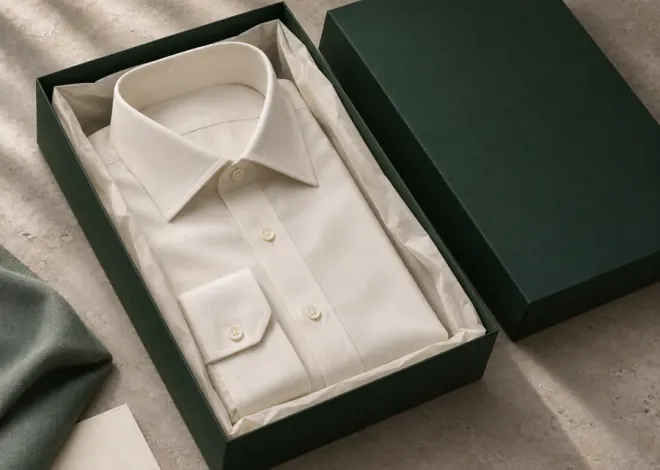
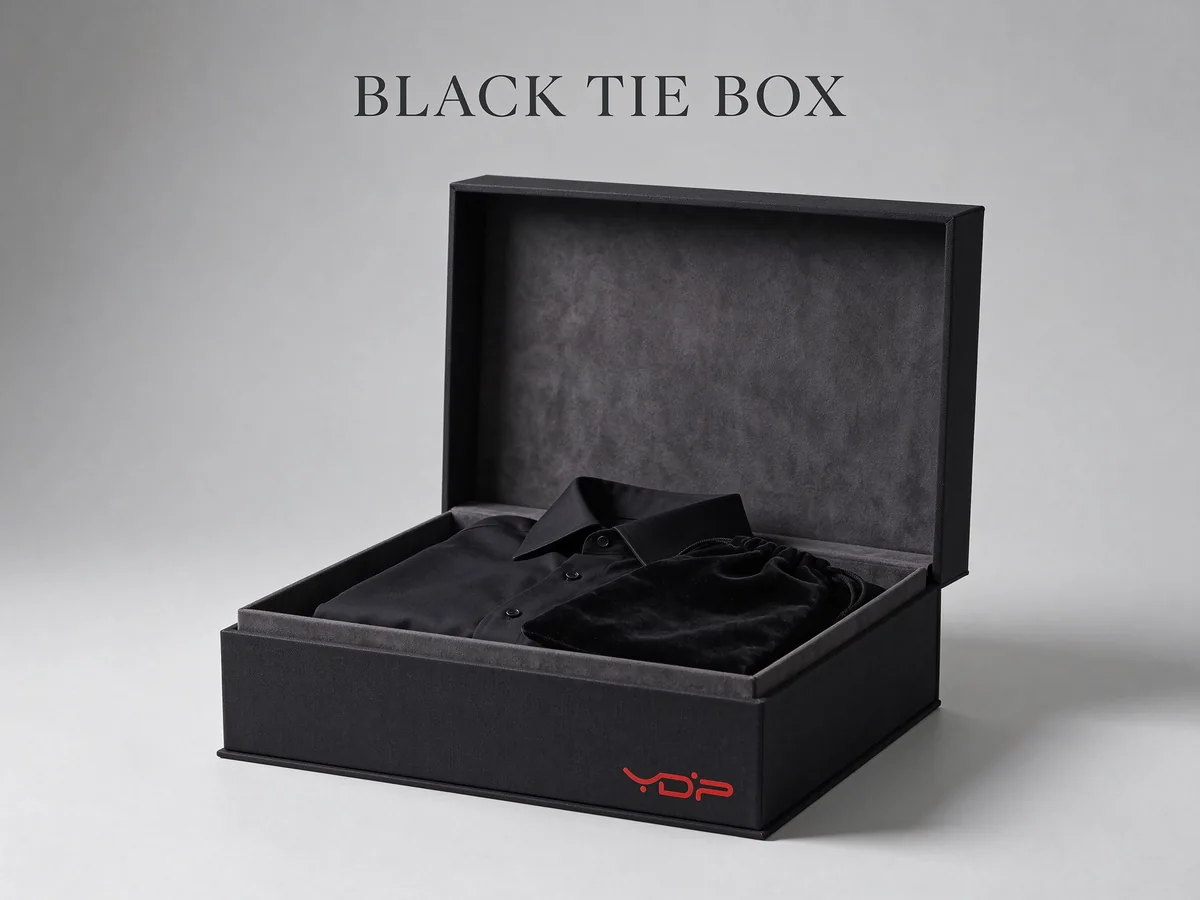
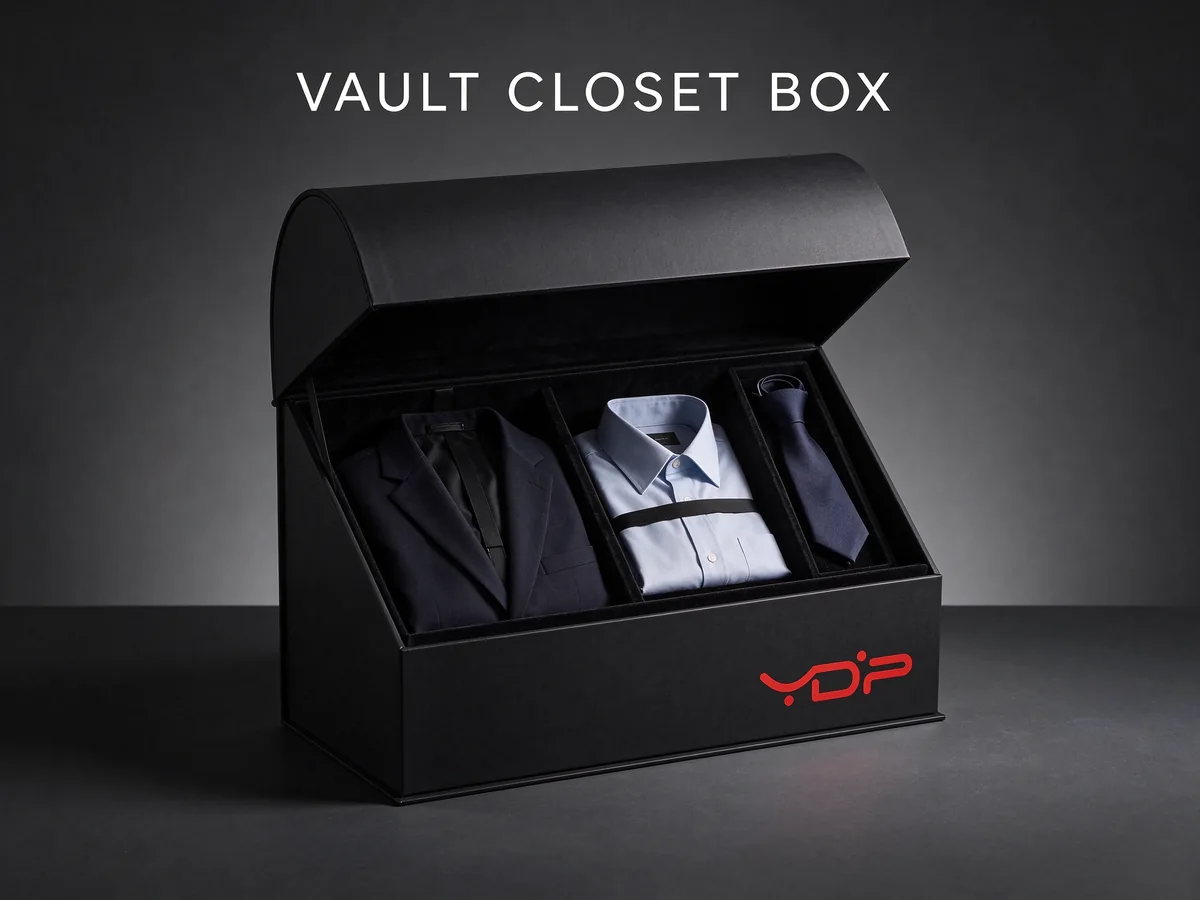
Shirt and tieThe collar and tie are both visible when the lid opens.Black dress shirtA dark insert keeps the focus on the collar and fabric.Formalwear setThe shirt, jacket and tie each have their own space.
Garments and accessories
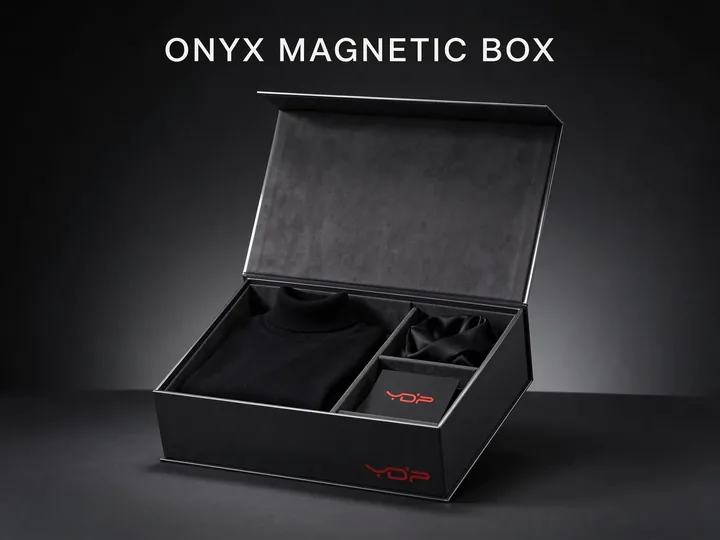
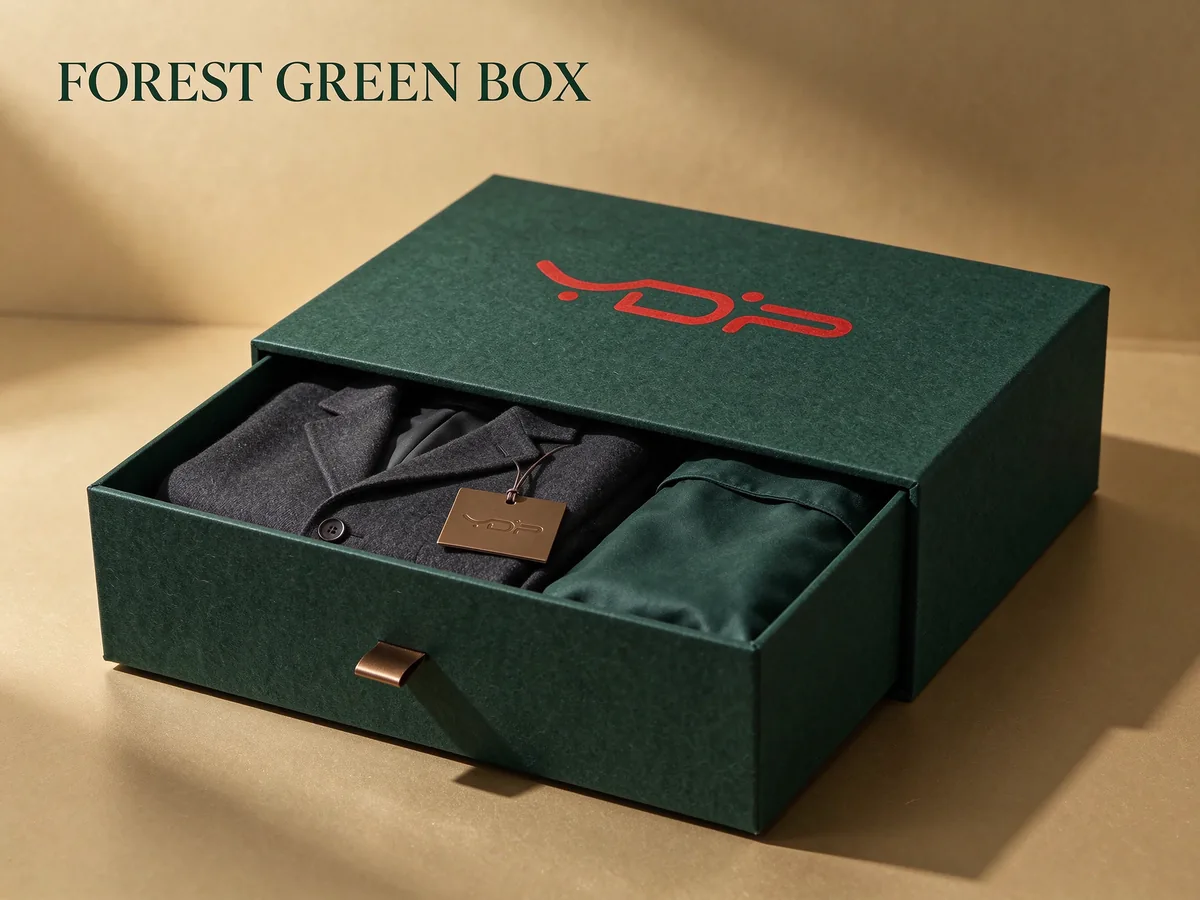
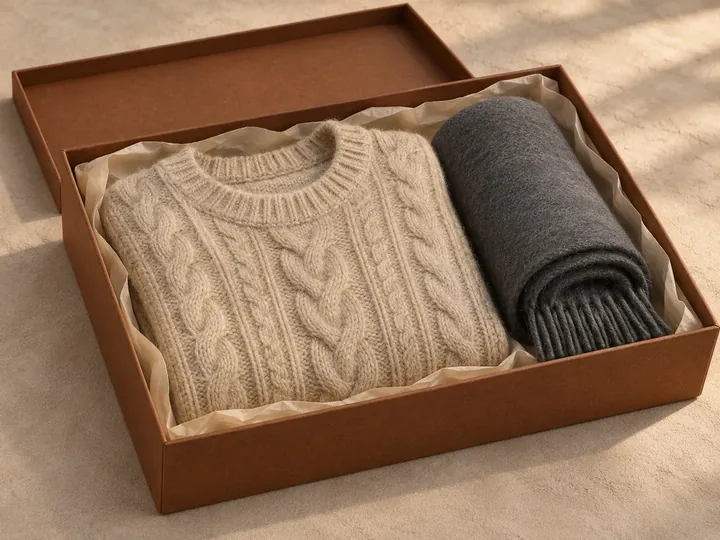
Dark magnetic gift boxSeparate spaces give the folded knit and accessories room to lift out.Brown textured gift boxThe lift-off lid reveals a garment and scarf arranged side by side.Forest green drawer boxThis layout uses a pull tab and two compartments.
Boxes with matching carry bags
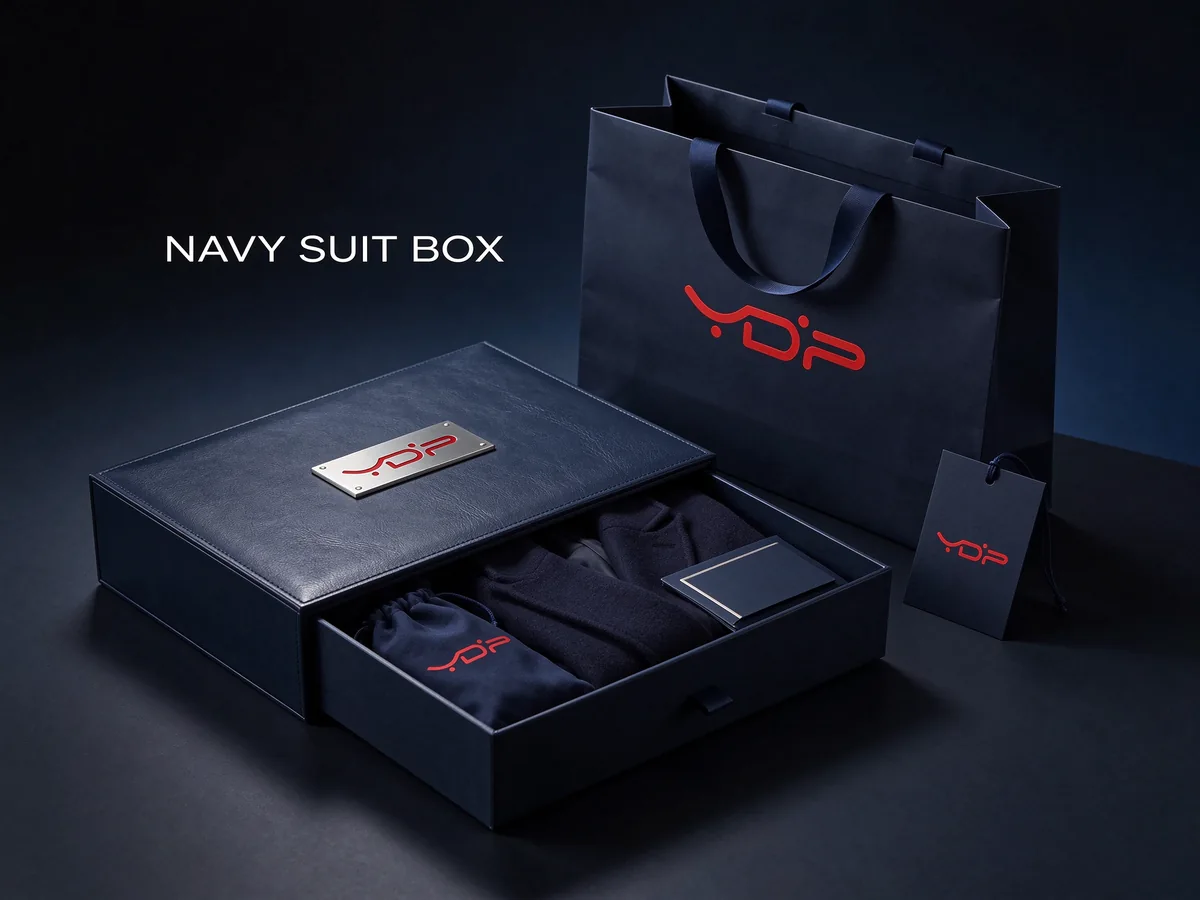
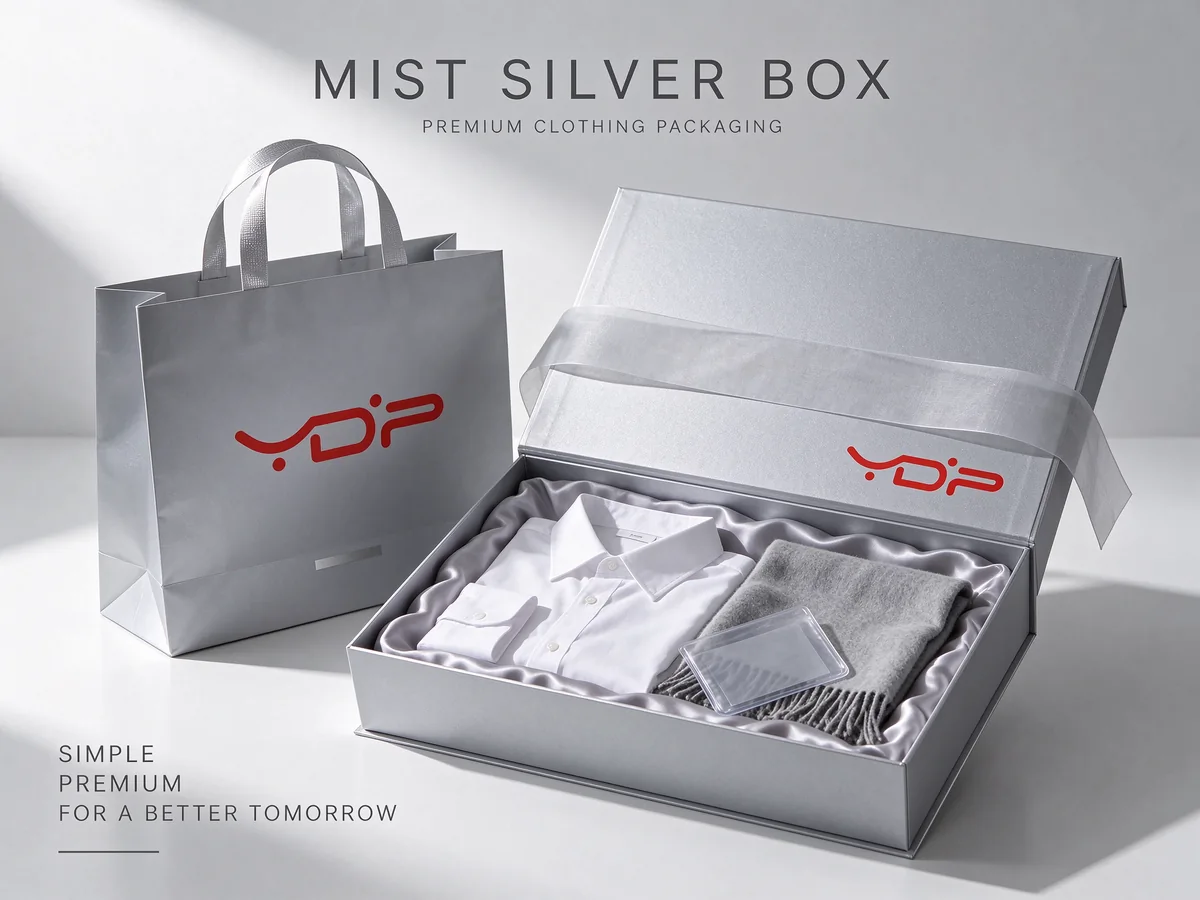
Navy suit packagingA matching box and carry bag extend the same colour and logo across the set.Silver apparel packagingThe light box and bag carry the same logo, with a separate space for the knitwear.
Worked purchasing examples
Check shirt collar clearance, arrange a knitwear gift set or compare cartons for a fold-flat launch box.
Packaging concept with one folded shirt and tissue.
A dress shirt box with room for the collar
This worked example uses a single dress shirt. Measure the collar after adding the paper insert and tissue, then compare it with the usable depth inside the closed box at the same point.
Packed height in this example
43 mm
Nominal collar clearance
3 mm
Calculate clearance
Suppose the folded shirt measures 320 × 240 mm and is 39 mm tall before adding paper. A wrapped collar height of 43 mm and 46 mm of usable depth in the closed box give 3 mm of nominal clearance in this example.
Record the fit on one sample
Keep the wrapped collar measurement, lid-depth reading, closed-box photo and reopened collar photo with the same sample reference. Check for pressure marks at the collar and placket, and note whether the shirt lifts out freely.
Send for a quote
Include the packed measurements, largest applicable shirt size, paper components, logo position and quantity by artwork. Ask the supplier to itemise the insert and tissue.
Place the sweater and scarf side by side if you want both pieces to show when the lid lifts. Stack them if the gift box needs a smaller footprint, then check the depth with the tallest packed set.
Arrange the set
Trial the scarf beside the sweater and then on top. Beside it calls for a wider footprint, while stacking can raise the highest point. Use the largest sweater size and include any tissue, paper insert and gift card in both trials.
Check how the set opens
Lift the lid and inspect both pieces. Check whether a customer can take out the scarf and sweater without dragging the tissue or lifting the whole insert.
Send for a quote
Share the selected arrangement and the measurements of both pieces. Specify the lid logo position, paper accessories and assembled delivery. Request units per carton and outer carton dimensions for warehouse planning.
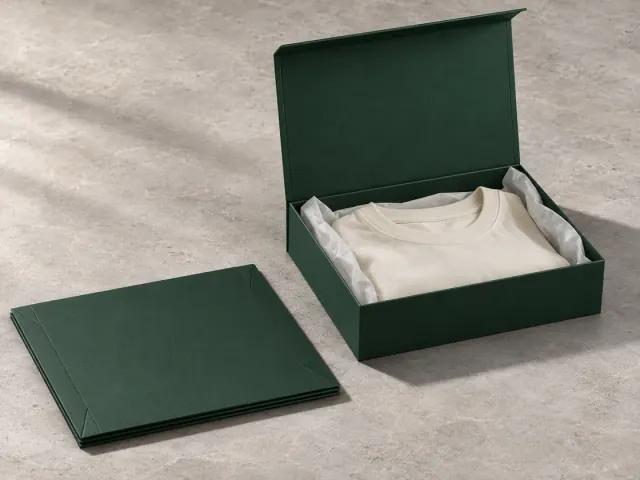
Packaging concept showing the flat and assembled forms.
A fold-flat gift box for a product launch
For a 1,000-box launch, compare flat-packed magnetic boxes with assembled rigid boxes using the same garment set, usable inside size and finish.
Assembled cartons in this example
50
Flat-pack cartons in this example
20
Compare the carton counts
The example assumes 20 assembled boxes or 50 flat-packed boxes per carton. Before comparing freight, request the carton dimensions, gross weights and any separate cartons for components.
Check receiving and assembly
Have a packing operator assemble a sample and check the corners, magnet alignment and fit with the garment. Time how long it takes to prepare a box for filling, then include that labour in the comparison.
Send for a quote
Use the same quantity, delivery postcode and target arrival date for both options. Ask for the packaging cost, freight scope and any assembly requirements. For direct-to-customer parcels, check the outer-carton requirements and include the cost in your comparison.